
Water is the necessary need for every individual, no one can live without water on Earth. About 71 percent of the Earth’s surface is water-covered, and the oceans hold about 96.5 percent of all Earth’s water. Water also exists in the air as water vapor, in rivers and lakes, in icecaps and glaciers, in the ground as soil moisture .It is the necessary need for every individual, and no one can live without water on Earth. Due to its presence on Earth almost everywhere it brings a question that how to pure it for drinking. After this question the most used answer pops up is the process of WATER DESALINATION.
Techniques for DESALINATION
Essential techniques for desalination, or expelling salt from water, incorporate warm procedures, such as, refining, and layer forms, for example turn around assimilation and electro dialysis.

WATER PURIFICATION
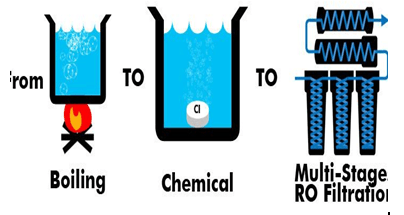
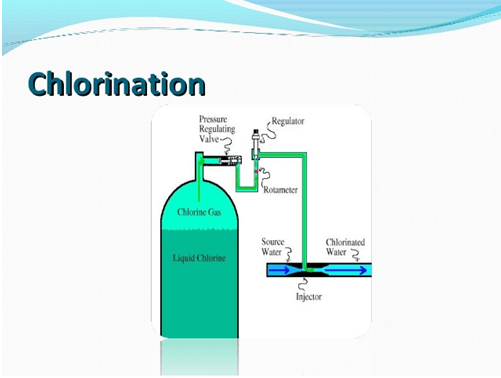
There are enormous aspects which makes water un-pure. Purified water contain many viruses, algae, bacteria, fungi and many more suspended particles. Water purification is the process of removing undesirable chemicals, biological contaminants, suspended solids and gases from water.It involves various steps which includes sedimentation, distillation , filters and many more biological processes. The substitutes in water cannot be determined visually. It takes many significant procedures and apparatus.People get interested in the household methods such as purifying water by boiling it, or chlorine filters but the fact is it that these procedures are not at all sufficient for proper purification. The standards for drinking water quality are typically set by governments or by international standards. These standards usually include minimum and maximum concentrations of contaminants, depending on the intended purpose of water use.
HOW TO TEST WATER QUALITY?

There are several parameters for measuring quality of water. It depends on the elements which are present in water.
ARSENIC – The dimension of arsenic in common waters, including untamed sea seawater, for the most part runs somewhere in the range of 1 and 2 µg/l (Hindmarsh and McCurdy, 1986; USNRC, 1999). Focuses might be raised, be that as it may, in territories with volcanic shake and sulfide mineral stores (Hindmarsh and McCurdy, 1986); in zones containing regular sources, where levels as high as 12 mg/l have been accounted for (Grinspan and Biagini, 1985); close anthropogenic sources, for example, mining and agrochemical fabricate (USNRC, 1999); what’s more, in geothermal waters (mean 500 µg/l, most extreme 25 mg/l) (USNRC, 1999). Mean arsenic focuses in dregs extend from 5 to 3000 mg/kg; the larger amounts happen in regions of defilement (USNRC, 1999) however are for the most part disconnected to arsenic focuses in water.
FLOURINE– Somewhere around one shading circle test pack is accessible for fluoride. However, compact advanced colorimeters are frequently favored on account of worries over exactness. Ackvo Caddisfly, a testing framework, as of late depicted a colorimetric fluoride test that can be perused by a cell phone application.
Video explain Water desalination :
Desalination plants:
The biggest desalination plants on the planet. This biggest clean water plant is in Ras Alkhair in Saudi Arabia, depends on turn around osmosis desalination. The establishment has begun since 2014 and is providing 1 million cubic meters of drinking water each day. It utilizes 2400 MW of intensity for the desalination forms
Saudi Arabia: Reverse Osmosis units
Saudi Arabia is the biggest maker of desalinated water from the ocean. In 1992, there were 18 desalination and power plants in the western drift, with an aggregate limit of over 0.7 million m3/day of water and 1,286 megawatts (MW) of power, and four plants on in the east drift, with an aggregate limit of over 1.1 million m3/day of water and 1,550 MW of power. In addition, three plants were under development and two plants under offering. In 1992, real desalinated water generation was around 675 million m3
Video link :
Tampa Bay Seawater Desalination Plant
The Tampa Bay Seawater Desalination Plant utilizes a procedure called Reverse Osmosis (RO) to deliver drinking water from seawater.
The desalination plant is situated by Tampa Electric’s (TECO) Big Bend Power Station, which as of now pulls back and releases up to 1.4 billion gallons per day of seawater from Tampa Bay, utilizing it as cooling water for the power plant. The Tampa Bay Seawater Desalination plant “gets” up to 44 million gallons for each day (mgd) of that warm seawater, isolates it into drinking water and thought seawater and weakens the twice-as-salty seawater before returning it to the bay.
Pre-treatment:
Before the RO procedure, seawater entering the desalination plant moves through screens that evacuate trash, at that point experiences a conventional treatment process called coagulation and flocculation. In this procedure, synthetic concoctions are added to the seawater to make green growth, natural materials and particles bunch together so they can be evacuated all the more effectively in the sand filtration organize.
After sand filtration, the salty water experiences diatomaceous earth channels to expel residue and fine particles. Cartridge channels just before the RO films fill in as a barrier, evacuating any particles that might stay after the diatomaceous earth channels.

Jebel Ali desalination plant:
One of the quickest developing urban areas on the planet is additionally among the driest. Arranged between the Persian Gulf and the Arabian Desert, the Jebel Ali desalination plant makes the city of Dubai possibe.Dubai’s populace blast long prior exceeded its groundwater supply. Today, it gives just 0.5 percent of the city’s interest. To meet the other 99.5 percent daily peak of 416 million gallons, all things consider the Jebel Ali plant soaks up 2.8 billion gallons from the Persian Gulf consistently, transforming it into immaculate drinking water. In the initial step, the ocean goes through filtration crates, which detach expansive materials including rubbish, kelp, and sometimes marine life.

Pros and cons of desalination water:
Pros:
- Clean and fresh drinking water. Desalination plants can provide drinking water in areas where no natural supply of potable water exists.
- The water quality is safe to use for house hold works. It is just as safe as the tap water.
- Helps preserve current freshwater supplies safe for future generation.
Cons:
- The expense is high everyone country or organization cannot create it. It costs a large number of dollars just to clean a little among of water.
- It covers large number of land to build that plant which may belong to animals and other people.
- Chemical and waste created in condition which means that loads of synthetics are produced due to the process for example, chlorine and others chemicals, and also the salt left might be risky to the earth.
Reference:
- How much does a water desalination plant cost? – Quora. (n.d.). Retrieved from https://www.quora.com/How-much-does-a-water-desalination-plant-cost
- In photos: Dubai’s massive desalination plant. (n.d.). Retrieved from https://www.popsci.com/dubais-desalination-plant-photos
- Jeddah seawater reverse osmosis installation. (n.d.). Retrieved from https://www.sciencedirect.com/science/article/pii/S0011916400884532
- The largest desalination plants in the world – BetterWorldSolutions – The Netherlands. (2015, June 1). Retrieved from https://www.betterworldsolutions.eu/the-largest-desalination-plants-in-the-world/
- Tampa Bay Seawater Desalination Plant. (n.d.). Retrieved from https://www.tampabaywater.org/tampa-bay-seawater-desalination-plant
No water, no life. No blue, no green. – Sylvia Earle
 Water : the Life of Earth